Autumn 1827
Gilbert’s Inherited Farm
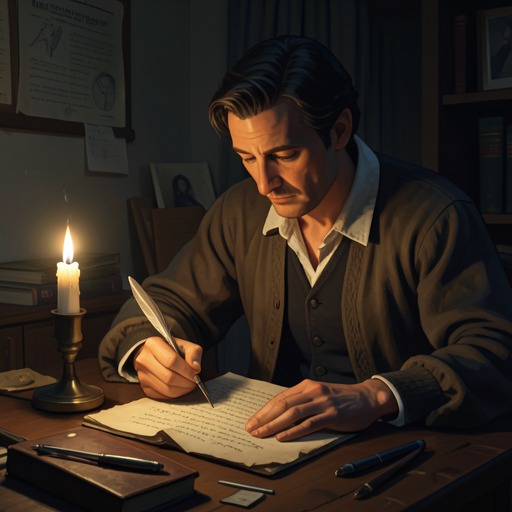
Years after his father’s death, [Gilbert Markham](entity:character-recall-character-gilbert-markham-bd45e8bb5959) has taken up the quiet work of farming despite youthful ambitions for a wider life. At home with his mother, his sister [Rose Markham](entity:character-recall-character-rose-markham-8de9a5dc54a7), and his unruly brother [Fergus Markham](entity:character-recall-character-fergus-markham-094c3e558a76), he hears that a mysterious young woman has moved into the decaying [Wildfell Hall](entity:location-recall-location-wildfell-hall-f9d05232c9d3) with a small boy and an elderly servant.
Late October 1827
The Stranger at Church
The newcomer, [Helen Graham](entity:character-recall-character-helen-graham-7e976888477e), appears at church dressed in mourning. Her striking looks and reserved manner draw the attention of the parish, including Gilbert, who is intrigued even as he decides she seems proud and forbidding. The village’s curiosity immediately begins to turn her private arrival into public speculation.
Late October 1827
A Rescue at the Garden Wall
While walking near [Wildfell Hall](entity:location-recall-location-wildfell-hall-f9d05232c9d3), Gilbert sees the little boy, [Arthur Graham](entity:character-recall-character-arthur-graham-239348750950), climb a wall and become caught in a tree. He catches the child before he falls. Helen rushes out, mistakes Gilbert’s intentions for a moment, then apologizes; their first exchange ends in brisk reserve on her part and wounded irritation on his.
Early November 1827
An Argument About Education
Helen visits the Markham home with her son and refuses wine for him, explaining that she wants him to dislike intoxicating drink. Gilbert argues that a child should learn to resist temptation rather than be shielded from it. Helen challenges the double standard that would expose boys to vice while keeping girls ignorant, and insists that children of either sex should be taught to recognize and refuse evil.
Late 1827
The Hidden Portrait
During a visit to [Wildfell Hall](entity:location-recall-location-wildfell-hall-f9d05232c9d3), Gilbert sees Helen painting landscapes for sale and learns that she has deliberately disguised the name of the place in one picture to keep her whereabouts secret. He also discovers a hidden portrait of a handsome young man turned toward the wall. Helen angrily refuses to explain it, making clear that her past is a guarded and painful subject.
Winter 1827–1828
Gilbert’s Attachment Deepens
Over the winter Gilbert increasingly seeks Helen’s company during walks, conversations, and visits to [Wildfell Hall](entity:location-recall-location-wildfell-hall-f9d05232c9d3). He enjoys her intelligence and artistic judgment, and grows attached to her son as well. His visits, however, fuel suspicion among neighbors already eager to interpret Helen’s independence as evidence of misconduct.
Spring 1828
The Sea-Cliff Picnic
Rose arranges a party’s excursion to the sea cliffs, where Gilbert and Helen share a long walk and a private conversation above the water. Her quiet response to the view and her thoughtful companionship deepen his feelings. Back with the group, Gilbert recognizes how strongly her presence has shaped the day, even while he tries to behave as though he remains attached to [Eliza Millward](entity:character-recall-character-eliza-millward-2518347630d9).
Early summer 1828
A Rejected Gift
Gilbert brings Helen a copy of Marmion, hoping to please her. She refuses to accept it unless she can pay, unwilling to enter an obligation she cannot repay. He eventually persuades her to take it as a gift, but the incident makes clear that Helen guards her independence even in friendship and will not let kindness become a claim upon her.
Summer 1828
The Vicar’s Warning
Rumors about Helen spread through the neighborhood, suggesting that she is living with a lover rather than as a respectable wife. At a Markham gathering, Eliza and [Jane Wilson](entity:character-recall-character-jane-wilson-228cb3e5429f) hint that Arthur resembles [Mr. Lawrence](entity:character-recall-character-mr-lawrence-187b106f5b51), while Gilbert defends Helen and rejects the gossip. The episode exposes how readily women’s reputations are judged and damaged by insinuation.
Summer 1828
The Vicar Admonishes Helen
The Reverend [Michael Millward](entity:character-recall-character-michael-millward-a85a56d1cb5f) visits [Wildfell Hall](entity:location-recall-location-wildfell-hall-f9d05232c9d3) to confront Helen with the reports and his own suspicions. Gilbert hears of the visit and is outraged by the vicar’s self-righteous account, but Helen has already been subjected to the accusation and its social consequences. Gilbert rushes to see her, determined to defend her, though he does not yet understand the history she is hiding.
Summer 1828
Helen Sets a Boundary
Gilbert declares his love and asks Helen to let him defend her honor by joining their lives. She tells him that she likes his companionship but cannot accept him as a husband, and warns that continued romantic advances will end their friendship. She promises that she may explain her reasons later, leaving Gilbert with both hope and a firm limit he is obliged to respect.
Later that summer
A Jealous Misreading
After leaving Helen one evening, Gilbert sees her in the garden with [Mr. Lawrence](entity:character-recall-character-mr-lawrence-187b106f5b51) and overhears her call him [Frederick](entity:character-recall-character-frederick-88469ba33ed9). He sees them walking intimately together and assumes that Helen is Lawrence’s lover. The sight transforms his trust into jealousy and anger, though the scene has been misunderstood: Lawrence is her brother, not her paramour.
The morning after the garden encounter
Gilbert Turns Against Helen
When Helen approaches Gilbert to give him the explanation she had promised, he refuses to listen and coldly walks away. He believes he has already learned enough from what he witnessed and chooses to punish her rather than ask her directly. Helen is left wounded by his distrust, and Gilbert’s pride turns an avoidable misunderstanding into a rupture.
Soon after the rupture
The Whip Blow
On the road, Gilbert encounters [Mr. Lawrence](entity:character-recall-character-mr-lawrence-187b106f5b51) and, in a jealous rage, strikes him with his whip, knocking him from his pony. He leaves before returning to check the injured man, then learns that Lawrence has survived with a head wound and a severe cold. Lawrence does not expose him, but the assault deepens Gilbert’s shame and strains their friendship.
After the assault
Helen Gives Gilbert Her Diary
Helen again asks Gilbert to hear her account, but he visits her in a spirit of accusation and refuses to give her the trust she asks for. When he tells her that he saw her with [Frederick Lawrence](entity:character-recall-character-frederick-lawrence-a23454bba213), she recognizes his error and gives him her diary to read, asking him to keep its contents secret. The diary shifts the story from Gilbert’s mistaken account to Helen’s own history.
June 1821
Helen’s Early Advice
In her diary, Helen recalls living with her aunt and uncle, who warned her to judge a suitor by character rather than beauty, flattery, wealth, or charm. Helen confidently believes that she could never love a man she did not respect. Her later choices will test that conviction, as she comes to see how affection and hope can blind judgment.
During the London Season of 1821
Helen Meets Huntingdon
At a [London](entity:location-recall-location-1bfd335cdd1b) ball, Helen meets [Arthur Huntingdon](entity:character-recall-character-arthur-huntingdon-e75b371a5e2c), whose wit and lively ease rescue her from the tiresome [Mr. Boarham](entity:character-recall-character-mr-boarham-032016b5da9e). She is quickly drawn to Huntingdon’s charm, despite her aunt’s warnings that he is wild and lacking in principle. Helen begins to imagine that her influence and affection might help reform him.
London Season 1821
Helen Rejects Boarham
[Mr. Boarham](entity:character-recall-character-mr-boarham-032016b5da9e) proposes, and Helen refuses him plainly despite her aunt’s encouragement. She objects to his age, narrow outlook, and her own complete lack of affection for him. Her refusal asserts her right to choose a husband for herself, even when an older relative believes a respectable match is more prudent.
Late summer 1821
Huntingdon’s Courtship
Huntingdon returns to Helen’s circle and becomes the object of her growing hopes. Her aunt warns her again that his companions and habits suggest a weak moral character, but Helen insists that his faults are products of upbringing and thoughtlessness. She believes marriage will give her the chance to guide him toward a better life.
September 1821
Helen Accepts Huntingdon
After Huntingdon confesses his love, Helen accepts him, subject to her guardians’ consent. She continues to believe that he has an essentially good nature that she can strengthen. Her uncle agrees to the match, while her aunt remains troubled by Helen’s willingness to stake her future on reforming a man whose principles she cannot yet trust.
Christmas 1821
The Engagement and Wedding
Helen and [Arthur Huntingdon](entity:character-recall-character-arthur-huntingdon-e75b371a5e2c) marry after a short engagement. Helen enters the marriage with joy and confidence, though she already knows that her husband’s habits and judgment differ sharply from her own. The wedding begins the experiment on which she has placed her hopes: that affection and moral counsel can transform him.
Winter 1821–1822
Marriage’s First Disillusionments
During their honeymoon and first months at [Grassdale Manor](entity:location-recall-location-grassdale-manor-8a677be37c04), Huntingdon limits their travels and resists Helen’s interests beyond himself. He also complains that her religious devotion competes with her love for him. Helen argues that love of God should deepen rather than diminish human affection, revealing how differently the spouses understand marriage, duty, and desire.
Spring 1822
Huntingdon’s Stories of Past Affairs
Huntingdon entertains himself by recounting former affairs and the harm done to other women and their husbands. Helen’s horror only amuses him, and she recognizes that his pleasure depends on her distress. The stories expose his casual contempt for fidelity and make her hope of reform harder to sustain.
Spring–summer 1822
Huntingdon’s London Absence
Huntingdon leaves Helen at Grassdale and remains in [London](entity:location-recall-location-1bfd335cdd1b) far longer than promised, sending short, evasive letters while she waits in loneliness and anxiety. She suspects that he has returned to his old companions and excesses. His absence establishes a pattern in which he demands her devotion while freely abandoning the responsibilities of marriage.
Late 1822
The Birth of Arthur
Helen gives birth to a son, [Arthur Graham](entity:character-recall-character-arthur-graham-239348750950), and hopes motherhood will bring a more generous purpose into her husband’s life. Huntingdon becomes fond of the child, but Helen fears that his indulgence will teach the boy the same selfish habits that have shaped his father. The child becomes both Helen’s comfort and her central responsibility.
1823–1824
Huntingdon’s Repeated Absences
Huntingdon repeatedly leaves home for [London](entity:location-recall-location-1bfd335cdd1b) and other pursuits, breaking promises to return promptly and allowing his letters to grow less affectionate and less frequent. Helen remains at Grassdale with their son, managing the household and paying down her husband’s debts from her own fortune. Her emotional life narrows around waiting, care, and fear for the boy’s future.
1823–1824
Helen Tries to Reform Huntingdon
When Huntingdon returns in poor health after excess, Helen nurses him and tries to restrain his drinking. His friend [Walter Hargrave](entity:character-recall-character-walter-hargrave-ebe0a2597563) sometimes helps prevent him from drinking more, though Hargrave’s conduct toward Helen is not disinterested. Helen’s efforts provide temporary improvement but also draw her deeper into the moral consequences of her husband’s life.
1823–1824
A Second Child and Renewed Neglect
Helen’s second child, a daughter, becomes part of the household, but Huntingdon remains self-indulgent and intermittently absent. He resists Helen’s attempts to travel with him and leaves her behind to manage the children. Her duties as mother and wife increasingly conflict with her need to protect herself and her children from his example.
Autumn 1824
Huntingdon’s Affair with Lady Lowborough
At Grassdale, Helen sees Huntingdon behaving intimately with [Lady Lowborough](entity:character-recall-character-lady-lowborough-bb87676920c8), the wife of his friend [Lord Lowborough](entity:character-recall-character-lord-lowborough-eb123193e987). Her suspicions are confirmed when she overhears the pair arrange a private meeting and hears Huntingdon speak of keeping his wife unsuspecting. The discovery destroys what remains of Helen’s trust and makes clear that his betrayal is deliberate, not merely thoughtless.
Autumn 1824
Helen Ends the Marriage in Name
Helen confronts Huntingdon and asks to leave with their son and what remains of her fortune. He refuses to let either go, fearing public disgrace and loss of control. Helen tells him that from then on they are husband and wife only in name; she will remain as mother and housekeeper but will no longer pretend to love him.
Autumn 1824
Lowborough’s Despair
[Lord Lowborough](entity:character-recall-character-lord-lowborough-eb123193e987) learns that his wife has betrayed him and is devastated by the deception. [Hattersley](entity:character-recall-character-hattersley-b905cc453efb) urges him to challenge Huntingdon to a duel, but Lowborough refuses, choosing to leave judgment to God despite his anger and despair. Helen recognizes the force of his restraint and feels compassion for the man whose trust has been abused.
Late 1824
Hargrave Presses His Suit
After Helen’s separation from Huntingdon becomes evident, [Walter Hargrave](entity:character-recall-character-walter-hargrave-ebe0a2597563) attempts to use her distress and isolation to win her. Helen rejects him and insists that she will not trade her conscience for comfort or protection. His persistence confirms her need to guard her independence against men who treat her vulnerability as an opening.
Late 1826
Helen Plans Her Escape
As Huntingdon’s companions encourage the corruption of young Arthur, Helen resolves to escape with her son and support them through her painting. She secretly saves money, plans to sell her pictures and jewels, and asks [Rachel](entity:character-recall-character-rachel-84f0cd683952) to help. Her decision is driven less by personal relief than by the fear that her son will grow into his father’s image.
January 1827
Huntingdon Destroys the Escape Plan
Huntingdon discovers Helen’s diary and learns of her plan to leave. He takes her keys, confiscates her money and jewels, and destroys her painting materials, eliminating her means of independent escape. Helen is left trapped at Grassdale, but the failed plan strengthens her resolve to find another way to protect her son.
Early 1827
Helen Reshapes Arthur’s Habits
During Huntingdon’s next absence, Helen works to undo the lessons her son has learned from his father. She carefully makes wine and spirits unpleasant to the child by secretly mixing them with tartar emetic, until he develops a strong aversion to alcohol. Her method reflects her determination to protect him, though it also repeats the contested question of whether virtue is best formed by avoidance or resistance.
Autumn 1827
Helen’s Flight to Wildfell Hall
When Huntingdon returns and places [Miss Myers](entity:character-recall-character-miss-myers-338f3d4c2a3c) in the household, Helen’s suspicions about the governess confirm that Grassdale is no longer safe for her son. She writes farewell letters, prepares the journey, and escapes before dawn with Arthur and [Rachel](entity:character-recall-character-rachel-84f0cd683952). They reach [Wildfell Hall](entity:location-recall-location-wildfell-hall-f9d05232c9d3) after a difficult journey, where Helen begins a secluded life under her mother’s maiden name.
Autumn 1828
Gilbert Finishes the Manuscript
After reading Helen’s account, Gilbert understands that the woman he had condemned was a devoted mother who endured years of betrayal and coercion. He is ashamed of his suspicion and recognizes that Helen had good reason to conceal her past. His understanding does not erase the damage of his earlier conduct, but it restores his trust in her character.
Autumn 1828
A Final Meeting at Wildfell Hall
Gilbert goes to [Wildfell Hall](entity:location-recall-location-wildfell-hall-f9d05232c9d3) and asks Helen’s forgiveness. She accepts his apology but insists that they must part, since their feelings are growing and she remains bound by her marriage. They agree that Gilbert may write after six months, but Helen refuses to let passion overrule conscience or her duty to her son.
During the separation
Frederick Marries Esther
[Frederick Lawrence marries Esther Hargrave](entity:event-recall-event-3a23e277703a), whose open-heartedness and good sense have won him. Their marriage is a contrast to the unhappy unions Helen has observed, and it reveals that Lawrence’s reserve had concealed a capacity for deep affection. Gilbert, who had once misread Lawrence’s relationship with Helen, is now glad of his friend’s happiness.
Late 1828
Huntingdon’s Fatal Relapse
Huntingdon’s illness worsens after he returns to drinking against medical advice. Helen, hearing that he is seriously ill and abandoned by his servants, returns to Grassdale to care for him. She secures a written promise that she may take their son away whenever she judges it necessary, then nurses her husband despite his suspicion and bitterness.
Late 1828
Huntingdon Faces Death
As Huntingdon’s condition becomes fatal, Helen tries to turn his fear toward repentance and faith. He admits that he regrets having wronged her but cannot claim sincere repentance, and he remains terrified of death and judgment. Helen stays beside him, holding his hand and praying, while the man who once mocked her convictions now clings to her for comfort.
December 1828
Huntingdon Dies
Huntingdon dies after asking Helen to pray for him. She remains with him until his final breath, then collapses from exhaustion. Though she fears for his soul, she holds to hope that divine mercy may ultimately redeem him, an expression of her belief that punishment need not mean final loss.
After Huntingdon’s death
Helen Returns to Staningley
Freed from the marriage that had trapped her, Helen returns to [Staningley](entity:location-recall-location-staningley-249dbf1c59f0) and spends time with her aunt. Gilbert waits for news, but Helen does not immediately seek him out, and her brother gives few details. The delay forces Gilbert to confront the possibility that Helen’s feelings have changed and that his hopes may have been only his own.
The following winter
Gilbert Hears of Helen’s Fortune
Gilbert learns that Helen has inherited [Staningley Hall](entity:location-recall-location-staningley-hall-8a24679be24a) and a substantial estate from her uncle. The news sharpens his fear that their difference in rank and fortune makes his love presumptuous. Rather than enter the house and risk appearing to seek her wealth, he considers leaving without seeing her.
Winter, after the inheritance
The Christmas Rose
Helen and her aunt encounter Gilbert at the gates of [Staningley](entity:location-recall-location-staningley-249dbf1c59f0) while returning from a drive. Helen invites him inside and asks whether he truly remembers her; when he admits that he still loves her, she offers him a [Christmas](entity:time-recall-time-christmas-a573265d0167) rose as an emblem of a heart that has survived hardship. Gilbert accepts it, and Helen makes clear that she returns his love.
The same visit
A Future Together
Helen and Gilbert discuss the future and agree that their separation need not continue. Helen wants to marry in a season that does not recall the sorrow of her first marriage or Huntingdon’s death, and she also wants her aunt to know and accept Gilbert. Their reunion rests on mutual affection rather than Gilbert’s earlier fantasy that love alone could repair a damaged life.
The following summer
The Wedding and Family Life
Helen and Gilbert marry and settle at [Staningley](entity:location-recall-location-staningley-249dbf1c59f0), where they live with her aunt and raise their children. Gilbert describes their life as happy and enduring, and the story closes with the contrast between their reciprocal partnership and Helen’s former marriage. Her son Arthur grows into a young man shaped by the care she fought to give him.